|
Playing catch-up instead of leapfrog.
|
|
The model, Muse Spark, performed better than Meta's previous A.I. models but lags rivals on coding ability.
|
|
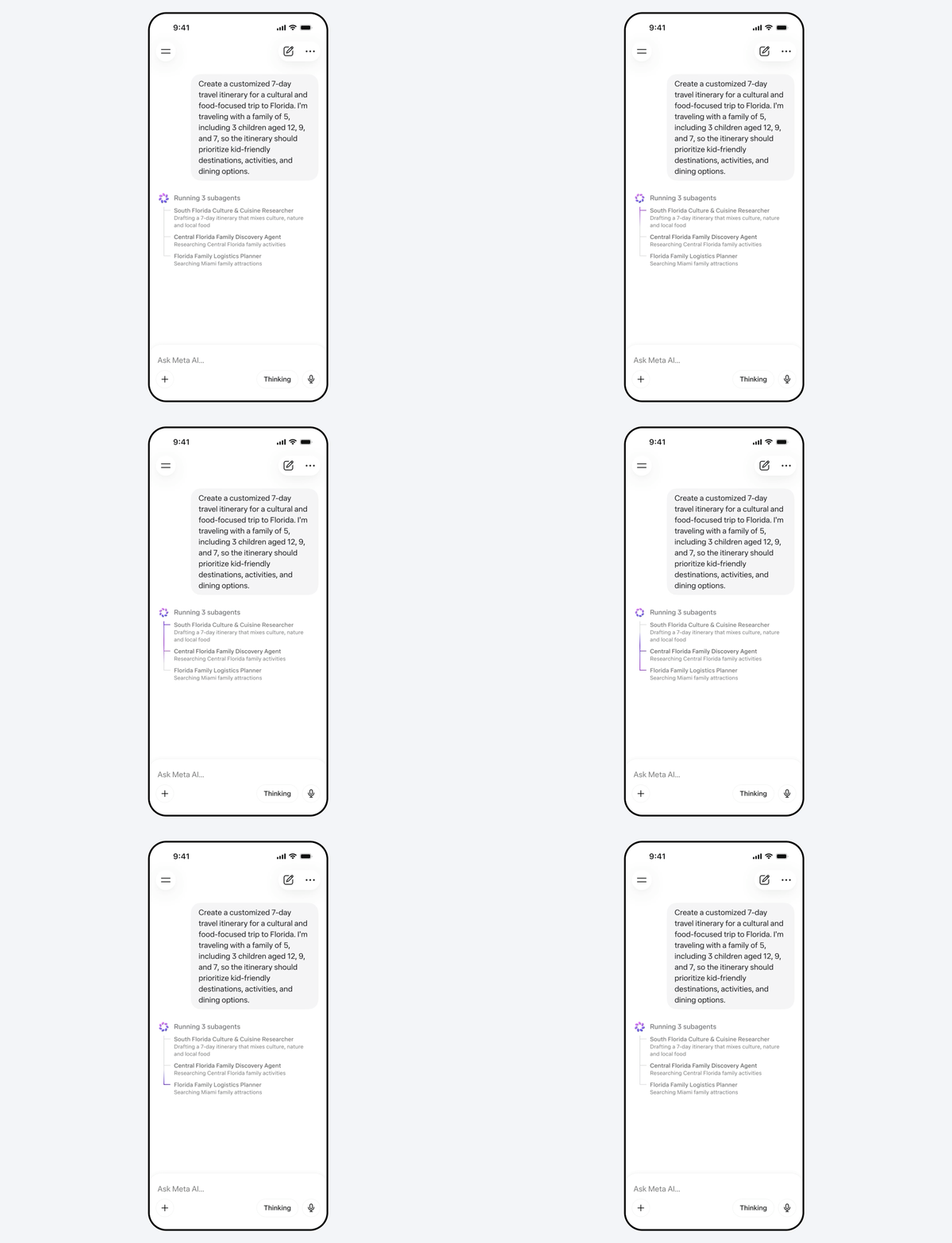 Following the icy reception to Llama 4, Meta is releasing the first in a new family of AI systems built by its recently formed Superintelligence team. The company is kicking off its new Muse era with Spark, a lightweight model geared toward consumer use. In the future, Meta plans to offer more capable versions of Muse, but for now, it's clear the company wants to nail the basics. Following the icy reception to Llama 4, Meta is releasing the first in a new family of AI systems built by its recently formed Superintelligence team. The company is kicking off its new Muse era with Spark, a lightweight model geared toward consumer use. In the future, Meta plans to offer more capable versions of Muse, but for now, it's clear the company wants to nail the basics.
To that point, many of Spark's capabilities are table stakes for a new model in 2026. For instance, it offers both "Instant" and "Thinking" modes. With the latter engaged, the model will take an extra few moments to reason through a prompt. Other consumer-facing AI systems have had this kind of flexibility for a while. Anthropic, for example, was one of the first AI labs to offer a "hybrid reasoning model" when it released Claude Sonnet 3.7 at the start of last year. That said, Meta plans to add an even more powerful "Contemplating" mode down the road.
A GIF demonstrating Muse Spark's multi-agent capabilities. MetaMuse Spark can also coordinate multiple AI subagents to tackle a request. Meta suggests users will see this capability in action when the
|
|